
A More Long-Term and System-Oriented Approach
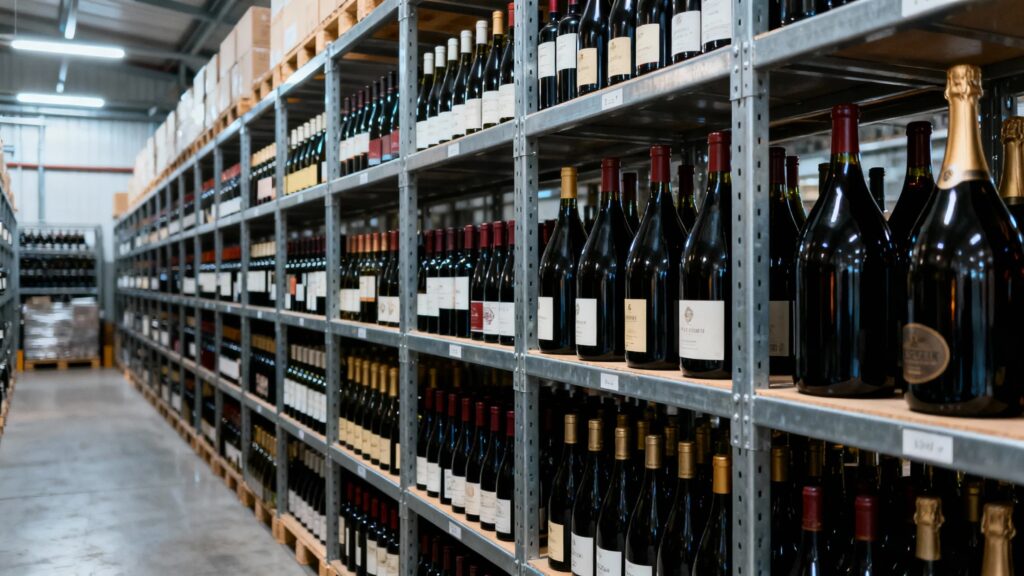
As the industry moves toward 2026, global demand for glass packaging has remained relatively stable, but the nature of procurement decision-making is undergoing a structural shift. For wine bottling facilities, glass bottle procurement is no longer a choice based on a single indicator, but a systemic decision highly related to production pace, supporting infrastructure, and execution results.
Given that bottling plans heavily rely on advance planning, procurement teams are incresingly focusing on whether a sourcing model supports plan lock-in, minimizes execution-stage adjustments, and enables smooth coordination between different production stages.
Regional Conditions Are Reshaping Procurement Strategy
From a global supply perspective, different production regions will face varying risk structures in 2026. Some European markets are still affected by energy policies, carbon cost pass-through, and regional logistics disruptions, making procurement rhythms more susceptible to external variables in certain sourcing areas. By contrast, North America benefits from a relatively mature trade environment, allowing procurement teams to plan with clearer assumptions.
In this context, procurement decisions for the Canadian market are better aligned with medium- to long-term planning rather than short-term, defensive sourcing. A clearer operating environment allows procurement teams to shift their focus from basic availability toward alignment with established bottling schedules.
Price Advantage Must Be Evaluated Through Deliverability
Traditional price comparisons often focus on unit cost or short-term quotations. In real bottling operations, however, a single unplanned delay can quickly translate into additional labor, equipment adjustments, and rescheduling—costs that often outweigh nominal price differences.
While some manufacturers continue to invest in energy optimization and long-term cost efficiency, procurement execution ultimately depends on whether a supply system can absorb volatility without pushing disruptions downstream. From a procurement execution perspective, what is more realistic is whether the supply chain has sufficient buffer capacity to avoid frequently transferring pressure to the bottling process when faced with fluctuations.
Packaging Integration Is an Underestimated Procurement Variable
In many procurement projects, bottles, closures, and capsules are supplied through separate systems. Even when each component appears competitive on its own, the coordination burden across multiple suppliers is often underestimated during the evaluation stage.
When bottling schedules require tight coordination, a solution that allows for multi-category collaboration within a single supply structure and includes comprehensive planning from the outset is more beneficial for procurement teams in controlling uncertainties and continuously improving overall efficiency during actual operations.
Batch Management Influences the Frequency of Execution Adjustments
In large-volume production conditions, execution efficiency is rarely determined by whether a single sample meets specifications. Instead, it is shaped by how closely successive batches perform over time. Variations in dimensions, tolerances, weight distribution, or surface treatment may not be apparent during sampling, but tend to surface during continuous bottling runs—often resulting in frequent line adjustments, increased loss rates, or forced schedule changes.
Supply systems with experience in large-scale production typically manage this risk through disciplined mold control, batch planning, and production rhythm management. For procurement teams, the value of this capability lies not in in superior performance of individual batches,but in fewer downstream adjustments and a smoother execution flow—an advantage that is difficult to replicate through last-minute interventions.
Conclusion: Certainty Is Becoming a Core Procurement Value
Overall, the core challenge facing glass packaging procurement in 2026 is not changing demand, but rather maintaining smooth execution in a complex environment. For Canadian wine bottling facilities, procurement priorities are shifting from price optimization alone toward structures that support risk control and operational flow.
Supply structures that enable long-term planning, reduce mid-cycle intervention, and perform consistently across production phases are increasingly defining procurement value. In an environment where uncertainty is the norm, certainty itself has become the most strategic advantage.